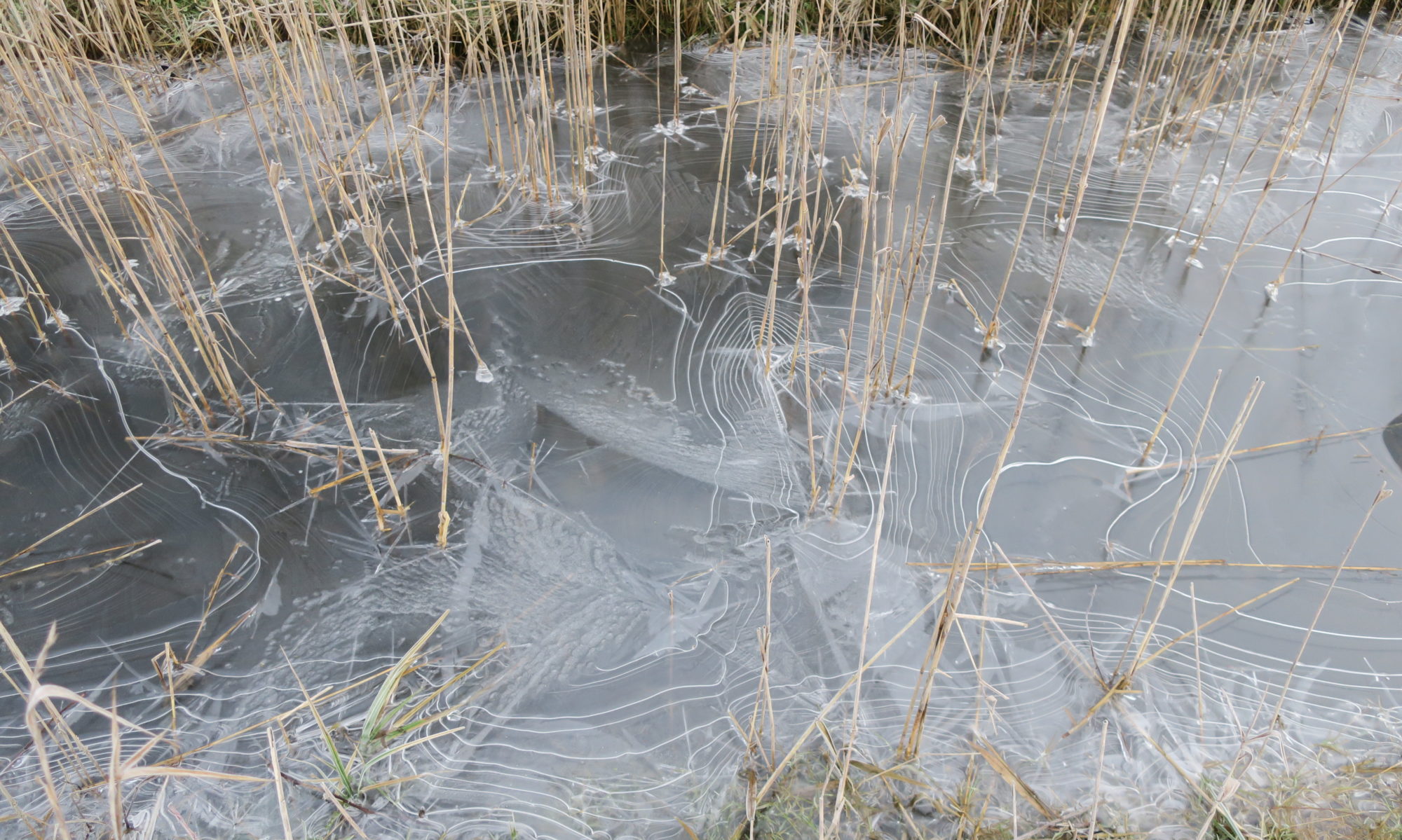
On the 25 to 26th April Norwich Community Gardens Festival will celebrate and make better known the work of many volunteers who give time to caring for green spaces around the City. You can come along and support the volunteers in a range of activities across the City. Included is an opportunity to meet volunteers at Danby Wood in the Yare Valley between 9am and 3pm on Sunday 26th.
Other attractions are a Norwich Tales and Trails Puzzle Walk, a bike ride, a herb propagation workshop and a children’s Spotting and Activity Sheet.
The Yare Valley Meadow Makers will hold their AGM Meeting at Warwick Arms Public House (upstairs room) on Wednesday the 15th of April 7:30-9:30pm.
The YVMM continue to extend their activities. Amongst the past year achievements were
An interpretation/notice board erected at the top of UEA Broad Hay meadow,
Received a Norfolk Biodiversity award in the spaces for nature and wellbeing category.
Over 5kg of wildflower seeds sown on the UEA Broad hay meadow
Further planting on Strawberry field to better establish yellow rattle.
Trial sowing of wildflower seed on the old donkey sanctuary to see how this might develop.
Planting of 165 native trees on the UEA meadows to help provide better support for wildflowers in times of drought.
Amongst the activities proposed for next year are botanical surveys, more tree planting, Yellow rattle and Red Bartsia seed collection, and a review of the old donkey sanctuary.
The Agenda for the AGM is here, and the Annual Report for 2025-2026 is here.
Mark Webster of the Conservation Volunteers writes:
“Not sure if it’s Spring or not yet? The weather is variable but we will be staying out all month, although we do have our semi-indoor Jolly Trips this month too: these are our much-loved and much-anticipated ‘works outings’ where we go to places chosen by some of our regular volunteers for a work-free day out. These ‘thank you’ days are open to all existing volunteers (including Easton students) although if any day is oversubscribed then preference will be given to those who have done the most task days with us already. Please do ask any eligible people to book for these days as soon as you can by contacting me ( 07740 899 691 / mark.webster@tcv.org.uk ) or telling their leader during a task day.
There are still some actual practical tasks to do as well though, including wildflower planting at two new Broadland sites, removing invasive species (no, not balsam yet!) and various jobs to keep pathways open across Norfolk so that people can get into their local green spaces even when the weeds start to grow up!
Whether volunteers are joining us at Sainsburys in Norwich or on-site, please can I suggest that you ask them to leave enough time to get to the meeting point BEFORE the minibus arrives. We usually have to get on to the work area as soon as we do arrive, and we don’t want them to miss their chance to join us. At some sites it can be difficult to find us once we have left the meeting point, but if they are lost or running late they can call or text (or whatsapp) 07740 899 691. I will see if I can direct them on to where the team are – or get someone to come and find them (if we can do this without disrupting the rest of the team too much). It is also worth noting that parking can sometimes be extremely limited near to where we are actually working, hence the need for a meeting point with spaces, but perhaps some distance from where we are working.”
Volunteers from the Yare Valley Meadow Makers (YVMM) have in recent years put a lot of effort in improving the meadowland at UEA. With trees from the Woodland Trust, they and the UEA Biodiversity Heroes are taking another step to improve the ecology of the meadows. The trees will add to those already planted in February this year.
Matt Tomlinson of the YVMM writes:
“We have 105 wildlife focused native trees coming from the Woodland Trust and need your help to plant them on the UEA Meadows. The trees will give more shade (better able to cope with droughts), increased habitat diversity and link together the wooded habitats on campus and lake sides. As well as providing an excellent habitat in their own right. In the future they will be coppiced to create valuable scrub habitat.
Species include 15 x silver birch, 15 x hazel, 15 x hawthorn, 15 x rowan, 15 x English oak, 30 x blackthorn”
Join the work party at UEA Meadows on Saturday March 7th 10-12 am
Meet at the same place as in February, at the new sign on the UEA meadows (Bluebell Road entrance near North Park Avenue) What3words ///free.doctor.blocks
The Conservation Volunteers are looking forward to Spring with their activities this month. The hedge cutting season will end shortly to avoid the main bird nesting season from March to August, but hedge planting will continue apace. There are plenty of other conservation activities as well. If you would like to give your support the monthly programme from Mark Webster is here.
“I am particularly excited to announce the long-awaited start of the Leaky Dams project in the Tas Valley, where we will be making and installing natural flood defences, using trees sourced from the immediate area to create barriers to slow down floodwaters in a measured way. There’s also more chances to learn the ancient craft of hedge laying at Easton College, restoring a historic pond to how it was in the 1930s (we have the photographic proof of that!) and plenty of hedge and fruit tree planting – including a new community orchard in Cringleford, and new and old sites to see across Broadland. Plus there’s another chance to see the epic Blickling Hall estate.”
The Yare Valley Meadow Makers (YVMM) invite you to join with them and the UEA Biodiversity Heroes in planting trees in the university meadow.
Matt Tomlinson (centre of photo) of the YVMM writes:
“To beat the winter blues we have a winter work party planned, joining with UEA biodiversity heroes.
We are planting trees on the UEA meadows. For more shade (better able to cope with droughts), increased habitat diversity and linking together the wooded habitats on campus and lake sides. As well as providing an excellent habitat in their own right. Species are wild pear, spindle, hazel, blackthorn, rowan and wych elm. All excellent for wildlife, kindly supplied by the council and UEA.
[Come along at] 9-12am on Wednesday 11th February, meet at the new sign [in the photo] on the UEA meadow, if you are a little late please walk down the meadows to find us.”
YVMM hope to have another work party in late February, this time planting trees supplied by the Woodland Trust.
The Conservation Volunteers go forward into the New Year as active as ever. Their first outing is on Monday 5th January to Flordon Common. They will be working in the Yare Valley on Wednesday the 14th and Friday the 23rd clearing brambles and planting trees in Bluebell Wood at the Junction of Bluebell Road and North Park Avenue, and now part of Eaton Park. Is this a remnant of the wood Kett’s army camped in on their march to Norwich before setting up camp on Mousehold Heath?
At a meeting on Thursday, 11 December the Greater Norwich Growth Board (GNGB) agreed to recommend to Broadland District, South Norfolk and Norwich City Councils funding of £260,899 for a new UEA Boardwalk. A final decision on the funding should be made by the councils by March 2026.
The funds are from the Community Infrastructure Levy (CIL), which is a charge made on developers to finance improvements in local infrastructure and community facilities.
December Dip near old Boardwalk. Alternative route? Photo: Hilary Hann
The new boardwalk beside the River Yare will restore a key link to the popular Yare Valley Walk, and greatly increase opportunities to enjoy, appreciate, and understand the green space of the river valley and its wildlife.
Tim Hill again enlightens us on the birds to be seen on Marston Marsh. It is good to hear what he has to say about the scrapes. These were created recently as part of the work to reconnect the river with the marsh. The work had two main purposes, to improve the river’s ability to store water in times of flood, and to improve marshland wildlife habitat. There was concern about the effect of the heavy equipment used, but the surface scars are beginning to heal.
Here is Tim’s report:
A chiffchaff has decided not to migrate again and was “Chiffchaffing” into early December. Cetti’s warblers have been ever present and I recently discovered one that sounded like a great spotted woodpecker calling quietly. They are mobile but have been in the ditches either side of the central path running from the main entrance off Marston Lane (close to Abinger Way) to the river.
The new scrapes look very promising and are already attracting large numbers of black-headed gulls, with smaller numbers of herring and common gulls, all enjoying bathing in the winter afternoon sunshine. A heron has regularly opted to use the new fence around the pipe connecting the large scrape to the river as its favourite perch but has competition from the gulls and a kingfisher.
Gulls enjoying the Scrapes
November saw ducks regularly on the larger area of water at the east end and mallards have been joined by up to 4 gadwalls. The latter has only appeared here when the marsh has been in full flood before. Since November there has been a resident greylag goose that has wandered up and down between the new scrapes and has sometimes been joined by a small group of others. Pink-footed geese have been seen flying over, mostly in a SW direction, giving their classic “wink, wink” calls. They are usually seen around 8 am or soon after.
The bare earth at the west end was popular with corvids in late autumn. 100 were counted one afternoon being mostly crows and jackdaws but with a few rooks. The latter is a species that I have rarely seen on the ground here. Pied wagtails have also been seen on the ground around the new scrapes with a couple of visits by a grey wagtail flying over.
Large flocks of teal have visited in the last few weeks but have not landed. They usually come from the direction of Tesco, do a couple of circuits of the east end of the marsh and then return. Hopefully, now the wet area is much larger due to the recent rain, they might decide to settle on the water.
The “Marmite” species (ring-necked parakeet) seems to be thriving. The maximum number I have seen has been 30 and I am sure I missed a few. Without leaves on the trees, they ought to be easy to spot but that seems not to be the case. The best chance to count them is as they fly, as a flock, out from the poplars before returning to settle for the night.
The crows and magpies now have fewer perches to sit on as they wait for food to be placed on the gateposts at the east end of the boardwalk. At the beginning of December the large willow decided to shed about half of its branches with two large breaks, one either side of the main trunk.