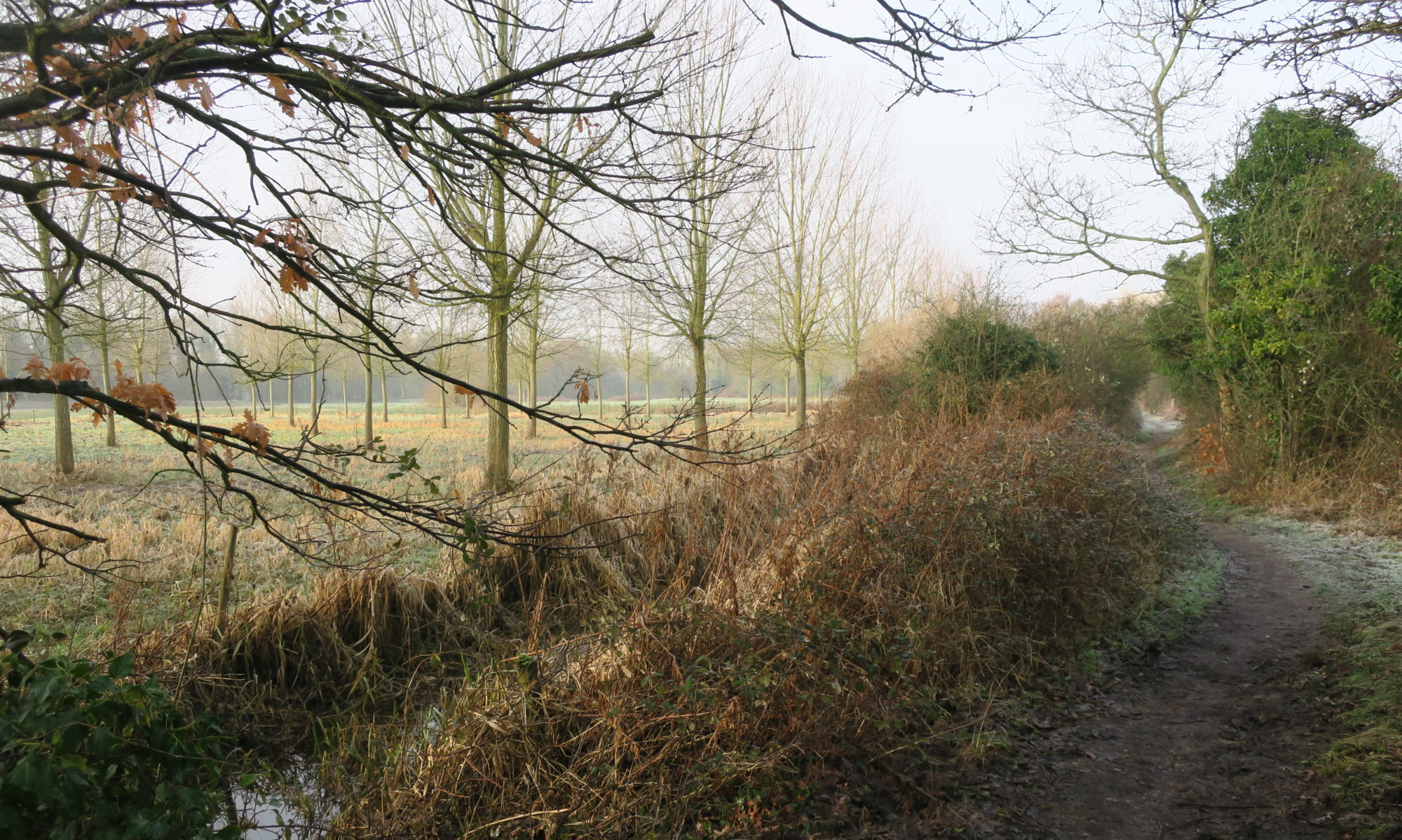

Picture: Heron Fly-by by Philip Wood
Welcome to our Planning page
Help is here for responding to:
The Apex Data Centre at Keswick
The Yare Valley Society has grave concerns about the Planning Application for a Data Centre at Keswick. In its present form the Application has serious deficiencies. If it were allowed to proceed in its present form it could have devasting effects on the wildlife of the valley, the quality of recreational green space, and the lives of resident in South Norfolk and Norwich in their own homes and going about their daily business.
More deficiencies in the Application are coming to light daily, as more of the many complex documents are scrutinised. The following data base is here to help you. Some of you will have read the Database in pdf form, but it is now located here on this webpage so that it can be constantly updated as more comes to light:
Keswick Data Centre Database
Welcome to the Yare Valley Society public database available to all wishing to comment on the Planning Application for a Data Centre at Keswick. The application has many aspects, and the database is a work in progress and may be added to or modified in the days to come. (SNDC’s own Environmental Quality Team has requested an extension of one month beyond the original 21 days consultation period to give them time to fully assess the information in the Application!)
Our thanks to the volunteers on the Data Centre Team who have assembled the underlying database.
Our thanks to many others who have written in with useful comments to guide the DC Teams work.
The Application lacks crucial documents necessary for its proper assessment. These include a Human Impact Assessment (HIA), Heat Impact Assessment, Lighting Scheme.
A Friends of the Earth overview of the environmental impact of Data Centres is at:
https://friendsoftheearth.uk/nature/environmental-impact-ai
If you would like to correct any errors or otherwise improve the database, email yvs@yarevalleysociety.org.uk.
List of contents
Part 1 Responding to the Application
A general guide to Planning Procedures
The Data Centre Application
Documents in the Application you might like to look at first
Responding to the Data Centre Planning Application
Some tips
Part 2 Documentation to support your DC Planning Application response
Local Policies and Green Strategies
Impact on wildlife
Impact on humans
Noise Pollution
Heat Pollution: The Heat Island Effect
Air Pollution
Light Pollution
Further matters for consideration
Part 1 Responding to the Application
A general guide to Planning Procedures
If you want to know more about the UK Planning procedures and responding to a planning application a valuable guide is “How to Respond to a Planning Application” issued jointly by the Campaign to Protect Rural England (CPRE) and National Association of Local Councils. The guide is at
https://www.cpre.org.uk/wp-content/uploads/2025/04/How-to-Respond-to-Planning-Applications-1.pdf.
Part 1 deals with Planning Procedure and Part 2 guides you on how best to respond to a Planning Application.
The Data Centre Application
The Planning Application for the Keswick Data Centre is on the South Norfolk District Council Planning Portal at https://info.southnorfolkandbroadland.gov.uk/online-applications/
Search using reference 2026/2957. The consultation deadline is 5th November.
Documents you might like to look at first
Remember these documents are produced by or for the Applicant and can be expected to cast the Application in the most favourable light. Look at them critically for errors and omissions.
The four DESIGN AND ACCESS STATEMENTS
PLANNING STATEMENT 9340966
From these you can move on to other documents to verify or otherwise what these statements claim.
Responding to the Data Centre Planning Application
You can submit your comments
Online: Register/login to the Planning Portal and use “make a comment” tab
Email: to planning@southnorfolkandbroadland.gov.uk.
Post: to Head of Planning, South Norfolk and Broadland District Councils, Horizon Centre, Peachman Way, Norwich NR7 0WF.
Be sure to quote the planning application reference number and include your own name and postal address. (anonymous comments without addresses are generally not accepted). Your postal address will be visible when published online, but your name, email, telephone number and signature will be redacted.
Some tips
If objecting state clearly your reasons for objecting by referring to planning policies, green strategies, or other factual information, and, as appropriate, to your own situation.
Be brief, factual, use sub-headings for your points.
You can comment several times on the same Planning Application.
Reduction in property values is not a valid planning objection.
Part 2 Documentation to support your DC Planning Application response
Local Policies and Green Strategies
Relevant Policies include:
South Norfolk Local Plan: Development Management Policies Document.
Page 111 to 113 Policy DM 4.5 Landscape Character and River Valleys
“All development should respect, conserve and where possible, enhance the landscape character of its immediate and wider environment. Development proposals that would cause significant adverse impact on the distinctive landscape characteristics of an area will be refused.”And more …
Page 114 to 116 Policy DM 4.6 Landscape Setting of Norwich
Referring to Norwich Southern Bypass Landscape Protection Zone (NSBLPZ); Key Views, and Undeveloped Approaches.
Pages 88 to 89 Policy DM 3.13 Amenity, noise and quality of life
“Development should ensure a reasonable standard of amenity reflecting the character of the local area. In all cases particular regard will be paid to avoiding: … c. Introduction of incompatible neighbouring uses in terms of noise, odour, vibration, air, dusts, insects, artificial light pollution and other such nuisances … Development will not be permitted where the proposed development would generate noise or artificial light which would be significantly detrimental to the amenity of nearby residents”
Policy DM 4.6 on p 30 at
Policy DM 4.7 on p30 at
Greater Norwich Growth Board
GNGB has identified the Yare Valley as both a Strategic and as a Priority Green Infrastructure Corridor. It plays a vital role in linking Nature Reserves and in sustaining the Norwich local ecological network. The Strategy is at:
https://www.greaternorwichgrowth.org.uk/article/67059/Green-Infrastructure-Strategy
The map on 5.2 page 27 illustrates the GNGB vision for developing a strategic multi-functional network of GI connecting people, places and nature in and around Norwich.
The Data Centre will very close to the Yare Valley Strategic and Priority Green infrastructure Corridor.
Impact on wildlife
The Data centre site is within 1Km of 3 local nature reserves, 10 county wildlife sites, 4 ancient oak trees and 1 roadside nature reserve (source: Norfolk Biodiversity Information Service). The Data Centre will also be very close to the Yare Valley Strategic and Priority Green Infrastructure Corridor and a key player in the GNGB Green Infrastructure Stategy. The Corridor sustains the local ecological network and is an important wildlife link between habitats and a migration corridor essential for wildlife survival in a climate change era. Without proper safeguards in place, Noise, Heat, Light and Air pollution could impact on habitats and render the corridor ineffective.
Map 8B showing GI Corridors in the Norwich Urban Area is after para. 222 at
It shows Data Centre site at less than 100m from the Green Infrastructure Corridor of Yare Valley.
As recently as 2025, £97 000 was spent to boost wildlife in the Corridor, by creating “Unique habitats by River Yare to support wildlife” as “part of wider government commitment to restore nature and protect water environment”.
Details of the habitat improvement to boost wildlife in Norfolk on the River Yare Chalk Stream at Keswick Marsh 500 metre from planned Data Centre are at:
https://www.gov.uk/government/news/rare-chalk-stream-created-to-boost-wildlife-in-norfolk
Examples of effect on wildlife are:
Nocturnal species are disproportionally affected due to the 24/7 noise and light pollution the data centre will generate. Of these the Yare Valley Bats and Owls will be particularly affected (Ref: Fröhlich, A., Ciach, M. Environmental Science and Pollution Research (2019) 26:17284–17291 and Gomes, D., Goerlitz, H. PeerJ (2020) 8:e10551).
Noise adversely effects bats by masking prey from echolocation signals leading to displacement and fragmentation of habitats (Gomes, D., Goerlitz, H. PeerJ (2020) 8:e10551). The number of owls has been shown to be negatively correlated with nocturnal noise (Ref: Fröhlich, A., Ciach, M. Environmental Science and Pollution Research (2019) 26:17284–17291).
Light along commuting and foraging routes can act as a barrier, thereby amplifying its negative effects by fragmenting habitat networks. Light sources near bat roosting sites can lead to delayed emergence or roost abandonment. Bhardwaj, M. et al PLOS ONE (2021) 16(3): e0247400).
Impact on humans
There appears to be no Human Impact Assessment (HIA), and so what might be the effect on humans has to be dug out from the wide variety of other documents in the application. This is a major development with many possible sources of pollution that could impact on the health and well-being of the community. YVS will be asking the SNDC to require an HIA.
Understanding the impact of data centre noise pollution:
Noise Pollution
See the ACOUSTIC ASSESSMENTin the Planning Application
YVS comment:
- The massive cooling fans generate a continuous low frequency audible hum or drone 24/7 capable of bypassing standard sound barriers. More intense sound will be created by a multitude of emergency backup diesel generators during their regular monthly testing, or when they are run continuously in the event of a power failure.
- The noise pollution and its effects have not been properly assessed:
- The dominant noise component is low-frequency, but the assessment is made in dB(A). A-weighting heavily discounts lower frequencies. Where low-frequency components are prominent, A-weighted measures are inappropriate and lower guideline values should apply.
- Low frequency measurements or assessment seem not to have been made.
- The mitigation seems largely conjectural with “a large degree of uncertainty” and the difficult to mitigate low frequencies have been ignored. The noise will be present day and night.
- The assessment does not include any of the residential areas of south-west Norwich and to any extent the Green Infrastructure Corridor. Low frequencies can travel further and pass through walls and barriers more easily than higher frequencies.
South Norfolk Policy DM 3.13 (see above planning policies) is relevant.
See: WHO Night Noise Guidelines for Europe, 2009:
https://www.who.int/europe/publications/i/item/9789289041737
Guide to BS 4142 on noise pollution assessment:
Introduction at https://www.novaacoustics.co.uk/acoustics-hub-homepage/acoustic-standards/bs-4142-industry/
This introduction has links to more detailed information.
Low Frequency Noise: Institute of Acoustics
https://www.ioa.org.uk/news/low-frequency-noise-annoyance-new-briefing-note
Understanding the impact of data centre noise pollution:
Heat Pollution: The Heat Island Effect
YVS Comment:
- The Data Centre will be effectively a giant space heater ejecting most of its up to 150 MW into the air creating a “heat island” effect adding to the elevated temperatures already being experienced by climate change. Increased temperatures could change the hydrology of the marshes and the local ecosystem, affecting vegetation, composition of populations, and breeding. For humans increased environmental temperatures are not only uncomfortable, but they increase mortality and can aggravate certain medical conditions.
- The Applicant seems to have ignored the Heat Island Effect. The Effect together with Norfolk’s increasingly hot and dry climate, could have serious consequences.
- The Applicant needs to include an assessment of the effects of the heat output, and to demonstrate this is an optimal and climate-resilient location compared with cooler UK regions offering more efficient cooling and greater opportunities to reuse waste heat.
Cambridge University paper on Heat Island Effect:
The Data Heat Island Effect: Quantifying the Impact of AI Data Centers in a Warming World at:
“… we are able to obtain a robust assessment of the temperature increase recorded in the areas surrounding AI data centres globally. We estimate that the land surface temperature increases by 2°C on average after the start of operations of an AI data centre, inducing local microclimate zones, which we call the data heat island effect …”
Air Pollution
YVS Comment:
- The emergency backup diesel generators will release fine particulate matter (PM2.5) and nitrogen oxides (NOx) during testing and during grid outages. This will degrade the local air quality dependent on wind direction. These pollutants are linked to respiratory disease, heart disease, asthma and other serious health risks.
- The Applicant should be required to demonstrate why a less air polluting alternative cannot be used, such as gas powered generators.
See:
https://committees.parliament.uk/writtenevidence/165695/html
Imperial College London: Evidence submission to the inquiry into risks and opportunities to the sustainability of data centres in the UK (April 2026):
https://committees.parliament.uk/writtenevidence/164700/pdf
Light Pollution
YVS comment: There is no detailed lighting scheme in the Application. The scheme should make clear how it will minimise the impact on wildlife and the environment.
Visual impact
The new proposals for an immense structure in height and extent go far beyond the proposals in the Outline Planning Application 2020/0903 approve Mon 27 Feb 2023. It will increase the affect, in a significant way, on the appearance of the “undeveloped approach” along the Ipswich Road towards Norwich, and so is contrary to Policy DM 4.6 Landscape Setting of Norwich (see above). The relatively recent removal of mature screening trees on the Ipswich Road boundary of the site has already resulted in degradation of the approach.
The development proposals would have a significant adverse impact on the “distinctive landscape characteristics” of the Yare Valley Corridor, and in particular Marston Marsh, and is contrary to Policy DM 4.5 Landscape Character and River Valleys which states such applications “will be refused”. The marsh will lose some of its visual appeal and its sense of remoteness.
The proposed use of trees, bunds and cladding colours to reduce the visual impact is inadequate. The Applicant acknowledges that the data centre will remain visible even after fifteen years of tree growth. Climate change and associated droughts cast doubt on this growth estimate.
Further matters for consideration
These include water use, sustainability, economic benefits/disbenefits, electromagnetic pollution.
A work in progress.
End of Data centre Database – for the moment!
What follows here is our general Planning Page:
Here we will give hints and tips on how to use the Planning System to greatest effect to influence future planning decisions.
Our Planning page focuses on how we can protect and enhance the Yare Valley “Strategic Green Infrastructure Corridor” from Whitlingham Country Park to the proposed Bowthorpe Lakes Country Park.
The Campaign to Protect Rural England (CPRE) and National Association of Local Councils have jointly issued a guide here to Planning Procedure (in Part 1), and how best to respond to a Planning Application (in Part 2). The guide provides lots of useful information and also guidance on responding effectively to a planning application.
Using Planning Policy to support your case
Wherever possible it is helpful to support your case with reference to Planning Policy documents.
For the Yare Valley from the Whitlingham Country Park to Bawburgh, the planning policies of two District Councils, may be relevant to a particular planning application. On the left of the river going upstream South Norfolk District Council (SNDC) is the relevant authority. On the right, for the most part it is Norwich., otherwise SNDC (approaching Bawburgh).
Remember that no Policy is capable of protecting the Valley for all time. Policies are always subject change or being over-ridden by Local Authority Development Management Committees or by a Government Planning Inspector on appeal by developers. That is why we must always be alert to threats to our green space and respond with vigour.
Links to Policies
For South Norfolk District Council (SNDC)
Maps in particular pages 162 and 163 for maps for policies DM 4.5 and DM 4.6
For Norwich
Policy Statements in particular Policy DM 6 on pp 57-58
Map. Select the Norwich South Sheet.
Key Policies
The key Policies for protecting the Yare Valley Green Infrastructure Corridor are:
For SNDC
Policy DM 4.5 Landscape Character and River Valleys
All development should respect, conserve and where possible, enhance the landscape character of its immediate and wider environment. Development proposals that would cause significant adverse impact on the distinctive landscape characteristics of an area will be refused. All development proposals will be expected to demonstrate how they have taken the following elements (from the 2001 South Norfolk Landscape Assessment as updated by the 2012 review) into account:
- The key characteristics, assets, sensitivities and vulnerabilities;
- The landscape strategy; and
- Development considerations.
Particular regard will be had to protecting the distinctive characteristics, special qualities and geographical extents of the identified Rural River Valleys and Valley Urban Fringe landscape character types.
For Norwich
Policy DM 6 Yare Valley Character Area
Within the Yare Valley Character Area, as defined on the Norwich (South) Local Policies map, development will only be permitted where it would not damage the environmental quality, biodiversity or character of the area and where it is for:
- agriculture or forestry purposes; or
- facilities ancillary to outdoor sport and recreation or other uses appropriate to the purpose of this policy; or
- the limited extension of or alteration to existing buildings.
Other SNDC Policies that might be relevant
There are other policies of SNDC that can be relevant to applications in particular instances, and help support protection of the Valley. These are:
Policy DM 4.6 Landscape Setting of Norwich
All development proposals will not harm and where possible should enhance the landscape setting of Norwich with regard to the following considerations:
Norwich Southern Bypass Landscape Protection Zone
All development proposals within the Norwich Southern Bypass Landscape Protection Zone (NSBLPZ), as shown on the Policies Map, should have regard to protecting the openness of the Zone and, where possible, enhancing the landscape setting of the southern bypass, including the practice of wild flower planting and management regimes.
Key Views
All development proposals located within the Key Views ‘cones’ shown on the Policies Map should ensure they do not obstruct the long-distance views to and from the City.
Undeveloped Approaches
All development proposals within the visual zone of influence viewed from the identified Undeveloped Approaches to Norwich should reinforce and avoid undermining the rural character of the Undeveloped Approaches to Norwich.
Gateways
All development proposals on the approaches to defined Gateways (shown on the Proposal Map) shall reinforce and avoid undermining the significance of these Gateways as the visual points of the landscape and townscape change marking the ‘arrival’ at and ‘departure’ from the city of Norwich.
Development which would significantly harm the NSBLPZ or the landscape setting of the Norwich urban area will not be permitted.
Policy DM 4.7 Strategic Gaps between settlements within the Norwich woodlands and traditional orchards and will serve Tree Preservation Orders where necessary.
The Council will presume in favour of the retention of ‘important’ hedgerows as defined by the Hedgerows Regulations 1997. The Council will safeguard and promote the appropriate management of protected and other significant trees and hedgerows, unless the need for, and benefits of, a development clearly outweigh their loss.
Policy DM 4.9 Incorporating landscape into design
Where appropriate, detailed development proposals must demonstrate a high quality of landscape design, implementation and management as an integral part of the new development.
The provision for new planted features (such as tree belts, hedgerows, wild flowers and specimen trees) is expected to form part of development proposals from their outset and should provide an appropriate landscape setting for the scheme.
‘Hard’ landscape features (such as paving, kerb stones, street furniture, boundary treatments etc) will reflect and where possible enhance locally distinctive character and styles where relevant; or innovative contemporary solutions reflecting local context and reinforcing or creating local distinctiveness and the setting of the development.
Landscape schemes will be required to respect the character and distinctiveness of the local landscape and should ensure that any land remodelling respects the local topographic character in terms of height, slope, angle and character. Landscape schemes should be clearly and properly specified.
Norwich Southern Bypass Landscape Protection Zone (NSBLPZ)
4.56 A Landscape Zone has been identified where there are high levels of visual accessibility to and from the road to a predominantly open rural area that plays an important part in making the landscape setting of Norwich. This Zone does not have a distinct or special landscape character in its own right.
4.57 The review undertaken by Chris Blandford Associates (CBA) has concluded that for the most part the boundaries of the originally defined Landscape Zone are robust, subject to the to removal of some areas, most notably around Easton and Costessey, that will in future make only a limited contribution to the landscape setting. This is as a result of past or permitted development or preferred strategic sites allocations determined in the Joint Core Strategy and South Norfolk Site Allocations. The amended Landscape Zone is identified on the Policies Map (see Map DM 4.6).
A big thank you to all who respond to help safeguard the Yare Valley for the future.
Outcomes of planning applications will be reported on our News Page when they become available.